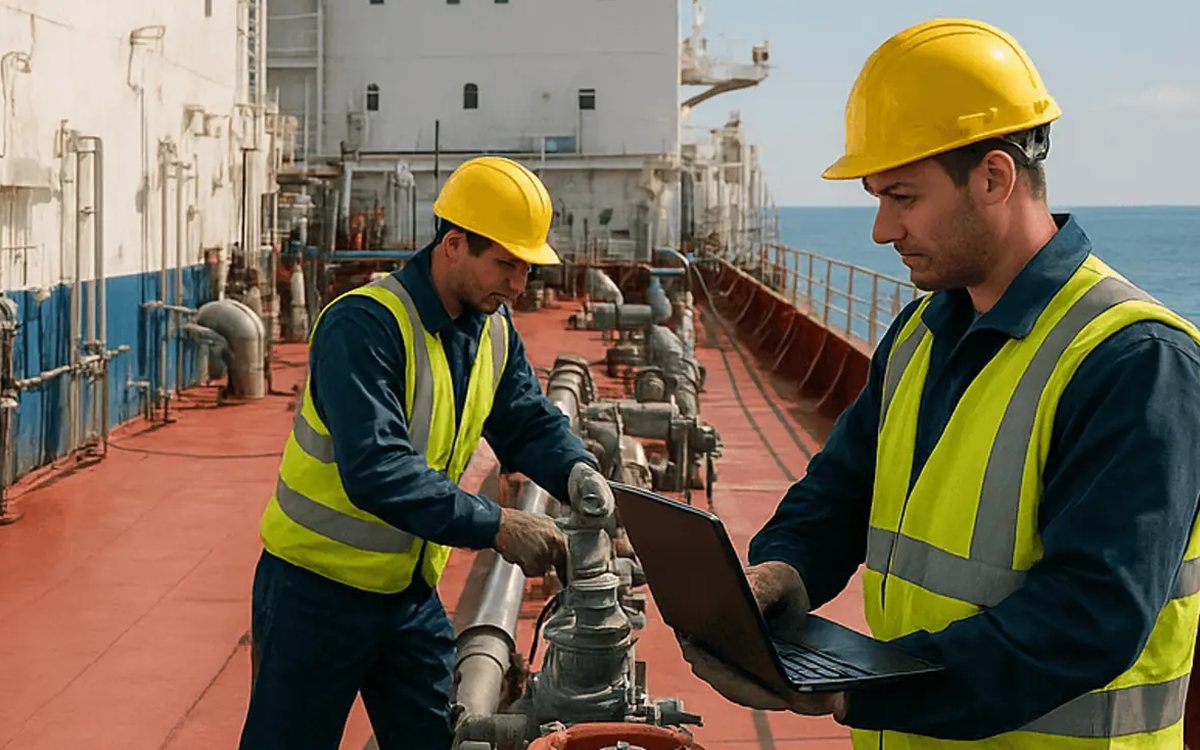
Fuel tank cleaning in Dubai removes sludge, sediment and contamination so a tank can be inspected, repaired or returned to service safely. It is a confined space operation with a waste stream attached, which makes planning and documentation as important as the washing itself.
Sludge accumulates quietly. A tank that still holds fuel may have lost usable capacity, and the sediment can affect transfer, filtration and fuel quality long before anyone opens the tank. Cleaning is often triggered by a survey, a repair, a fuel problem or a change of service.
This guide explains how the work is done, what safety controls matter and how to ensure the waste is handled properly.
What fuel tank cleaning involves
Fuel tank cleaning typically covers:
- Draining and transferring remaining fuel
- Removing sludge and sediment
- Washing tank surfaces and structures
- Cleaning suction, sounding and transfer arrangements
- Gas freeing and atmosphere testing
- Ventilation and entry control
- Collection and disposal of slops
- Inspection and condition recording
It is not a simple wash. The tank must be made safe before entry, and the waste must leave the vessel through an approved route.
Why sludge builds and what it costs
Fuel carries small amounts of sediment, water and heavy components that settle over time. Heating, blending and long storage can accelerate the process. The result is a layer of sludge that reduces capacity and can be stirred into the fuel during transfer.
The costs are practical:
- Reduced usable tank capacity
- Fuel quality problems and filter loading
- Difficulty sounding and gauging accurately
- Hidden corrosion under sediment
- Survey findings and repair delays
Cleaning is cheaper when it is planned than when it is forced by a fuel failure or a survey defect.
It also pays to record what the tank held, when it was last cleaned and whether any fuel treatment or blending has been used. That history helps the provider judge the likely sludge volume, choose the right method and estimate the waste stream before the team boards. Vessels with no cleaning history should expect a longer inspection and a more cautious plan.
Gas freeing and confined space entry
Safety is the first technical decision, not a preliminary formality. A fuel tank can hold flammable vapour and an oxygen-deficient atmosphere, and entry without proper controls is dangerous.
Before entry, the vessel and provider should confirm:
- The tank is isolated and locked off
- Fuel and sludge have been removed as far as possible
- Ventilation is in place and effective
- Atmosphere testing is carried out and recorded
- A permit-to-work is issued and understood
- Rescue arrangements and communication are ready
- Personnel are trained and equipped
The cleaning team should not enter until these controls are in place and the responsible officer is satisfied. A provider that treats gas freeing as someone else's job is not ready for the work.
The cleaning and sludge removal sequence
A practical sequence reduces rework and keeps the tank safe.
- Isolate the tank and confirm it is empty of usable fuel.
- Remove remaining fuel and free liquid to the agreed reception.
- Remove bulk sludge using safe manual or mechanical methods.
- Wash surfaces, structures and internal fittings.
- Clean suction wells, sounding pipes and transfer points.
- Ventilate and gas free in preparation for entry and inspection.
- Inspect, photograph and record the tank condition.
- Remove washings and slops to the approved facility.
- Dry and prepare the tank for its next use or repair.
The order matters because sludge that is disturbed after washing can undo the work, and inspection before the atmosphere is safe cannot proceed.
| Stage | Key control | Evidence to keep |
|---|---|---|
| Fuel transfer | Isolated and labelled | Transfer record |
| Sludge removal | Safe access and PPE | Work log |
| Washing | Correct water and chemicals | Method record |
| Gas freeing | Tested atmosphere | Test readings |
| Waste disposal | Approved facility | Receipt and manifest |
| Inspection | Safe entry | Photos and condition report |
Waste disposal and documentation
Cleaning creates a waste stream. Washings, sludge and oily residues must be collected, transferred and disposed of through an approved reception facility, with documentation that satisfies the vessel and the port.
Ask the provider:
- Which facility receives the waste
- What documentation the vessel will receive
- Whether collection and transfer are included
- How the waste is segregated
- Who signs the receipt
A fuel tank cleaning quote that excludes waste disposal is incomplete. The vessel remains responsible for its records even when a contractor handles the physical work.
Survey, repair and coating preparation
Fuel tank cleaning is often the first step in a larger job. If the tank will be surveyed, repaired or recoated, the cleaning standard must support that work.
Tell the provider what follows:
- A class survey or internal inspection
- Steel renewal or repair
- Coating inspection or renewal
- Work on suction, heating or transfer systems
- A change to a different fuel or service
Each of these changes the access, cleanliness and inspection requirements. Planning them together avoids cleaning a tank twice or closing it up before the surveyor has seen it.
Mistakes and limits
Common mistakes include treating gas freeing as a separate task, leaving sludge in suction wells, using water that contaminates the tank, and disposing of washings without receipts.
There are honest limits. Heavy sludge may need extended removal, some tanks have access restrictions, and corrosion discovered during cleaning can change the repair scope. A credible provider reports those findings immediately rather than after the tank is closed.
Choosing a fuel tank cleaning provider
Look for confined space competence, a clear method statement, approved waste arrangements and a willingness to coordinate with the surveyor or repair team. Ask who supervises entry, how atmosphere readings are recorded and what the vessel receives at the end.
RNS Shipping provides fuel and tank cleaning for vessels in Dubai, Jebel Ali, Dubai Maritime City and Khorfakkan. The operations desk reviews tank details, sludge history, access and the onward purpose before proposing a scope. For related scopes, read the Jebel Ali tank cleaning guide or the broader ship cleaning services in Dubai.
Fuel tank cleaning in Dubai is a safety-critical, documentation-heavy job. Plan the gas freeing, control the entry, remove the sludge properly and prove where the waste went. That approach protects the crew, the survey schedule and the vessel's records.
For a fuel tank cleaning scope or a combined cleaning and repair plan, contact the RNS Shipping operations team or review the ship cleaning service.
Frequently asked questions
Why does a fuel tank need cleaning?
Sludge and sediment reduce usable capacity, can affect fuel quality and may hide corrosion or coating damage. Cleaning is also needed before inspection, repair or a change of service.
Is fuel tank cleaning a confined space job?
Yes. Entry requires gas freeing, atmosphere testing, isolation and a permit-to-work system. The cleaning provider and vessel must agree these controls before anyone enters.
What happens to the sludge removed from the tank?
Sludge and washings must go to an approved reception facility with the correct documentation. Confirm collection, transfer and receipts are included in the scope.
How long does fuel tank cleaning take?
Duration depends on tank size, sludge volume, access, gas freeing and the standard required. A small tank may take a day, while larger or heavily sludged tanks can take several.
Which UAE locations are covered?
RNS Shipping supports vessels in Dubai, Jebel Ali, Dubai Maritime City and Khorfakkan, with wider UAE mobilisation discussed through the operations desk.
Questions ship managers ask
Why does a fuel tank need cleaning?
Sludge and sediment reduce usable capacity, can affect fuel quality and may hide corrosion or coating damage. Cleaning is also needed before inspection, repair or a change of service.
Is fuel tank cleaning a confined space job?
Yes. Entry requires gas freeing, atmosphere testing, isolation and a permit-to-work system. The cleaning provider and vessel must agree these controls before anyone enters.
What happens to the sludge removed from the tank?
Sludge and washings must go to an approved reception facility with the correct documentation. Confirm collection, transfer and receipts are included in the scope.
How long does fuel tank cleaning take?
Duration depends on tank size, sludge volume, access, gas freeing and the standard required. A small tank may take a day, while larger or heavily sludged tanks can take several.
Which UAE locations are covered?
RNS Shipping supports vessels in Dubai, Jebel Ali, Dubai Maritime City and Khorfakkan, with wider UAE mobilisation discussed through the operations desk.