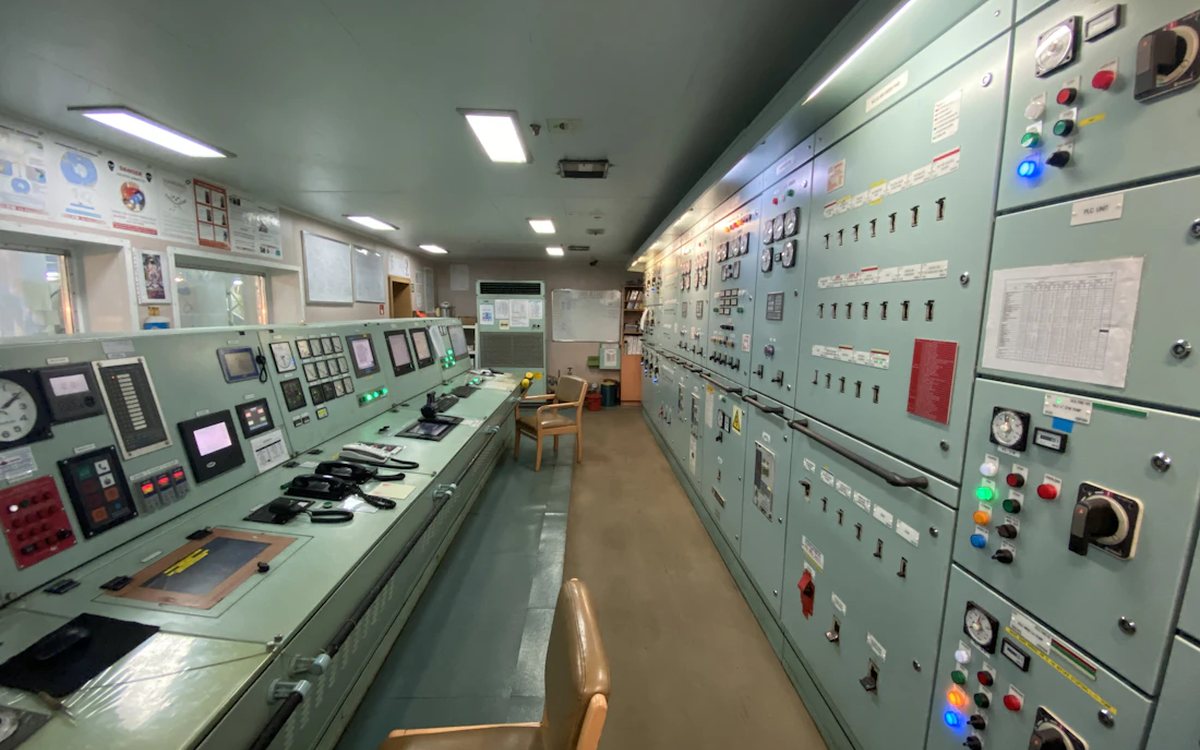
Marine automation services in Dubai keep the systems that watch, alarm and control a vessel working as intended. When an alarm repeats, a sensor drifts or a control panel stops responding, the vessel needs a technician who can trace the fault through the signal path rather than replace parts until something changes.
Automation is unforgiving of vague information. A report that says "alarm faulty" gives a technician almost nothing to work with. A report that names the alarm, the time, the operating condition and the last change to the system gives them a route in before they board.
This guide explains what automation work covers, how to prepare, and where vessels lose time on avoidable problems.
What marine automation covers
Marine automation is a broad category. On a working vessel it usually includes:
- Alarm and monitoring systems for machinery and tanks
- Control panels and local operating stations
- Programmable logic controllers and remote input and output modules
- Sensors, transmitters and signal conditioning
- Safety interlocks and shutdown circuits
- Automation software, backups and configuration records
- Network and communication links between systems
The boundary between automation and electrical or instrumentation work is not always clean. A drifting level reading may be a sensor, a wiring fault or a configuration error. The first task is to decide which, because the repair route and the cost depend on it.
Start with the alarm and the symptom
A useful fault report is built from observation. Before calling a provider, record:
- The exact alarm text and the panel or screen it appears on.
- The time and the vessel's operating condition when it appears.
- Whether the alarm is steady, intermittent or clears without action.
- Any recent work, software change or calibration on the system.
- Photographs of the panel, wiring and nameplates.
- Whether a temporary override is in place and who authorised it.
That last point is important. Overrides and inhibited alarms are common causes of confusion, and a technician needs to know what has been disabled before trusting the display.
Separate the symptom from the cause
Operators often report the consequence: a pump will not start, a valve will not move, a tank reads empty. The technician needs the chain. A pump that will not start may be waiting on a permissive from a level switch, a pressure transmitter or a safety interlock. Describing the whole sequence shortens diagnosis.
Sensors, transmitters and signal paths
Many automation faults begin at the sensor. Temperature, pressure, level and flow instruments drift, foul or fail, and the control system faithfully reports the wrong value.
Before authorising replacement, check:
- Whether the local gauge agrees with the remote reading
- Whether the instrument has been calibrated within its interval
- Whether the wiring and terminals are secure and dry
- Whether the signal is present at the panel and at the sensor
- Whether the correct range and units are configured
A sensor that is replaced without checking the signal path may not fix the fault, and the vessel pays twice.
| Symptom | Likely area | First check |
|---|---|---|
| Reading drifts slowly | Sensor or process | Compare with local gauge |
| Reading jumps | Wiring or connection | Inspect terminals and screen |
| No reading at all | Power or signal path | Check supply and loop |
| Alarm repeats at set point | Configuration or calibration | Review set point and deadband |
| Control output unstable | Controller or actuator | Check feedback and tuning |
Control systems, PLCs and safety interlocks
Control panels and programmable logic controllers hold the logic that connects sensors, actuators and safety devices. When that logic is changed without documentation, later faults become much harder to resolve.
Keep these records available:
- The current software version and a known-good backup
- The input and output list with addresses
- The alarm and trip set points
- A record of changes and who authorised them
- Any licence or dongle needed to access the software
Safety interlocks deserve particular care. A system that has been bypassed to keep a vessel running can hide a genuine fault and create a survey finding. Restoring the interlock should be part of the repair, not an afterthought.
What to prepare before a technician boards
Good preparation is mostly administrative, and it saves hours.
- Confirm the vessel's location, berth and access arrangements.
- Provide the maker, model and software version of each affected system.
- Make drawings, manuals and backups available on board.
- Arrange a responsible officer to accompany the technician.
- Confirm permit-to-work, isolation and testing procedures.
- Agree the working window and who can authorise changes.
For work that affects propulsion, steering or safety systems, agree in advance how the system will be tested and who signs it off. Testing is part of the job, not a delay at the end.
Survey, drydock and cyber hygiene
Automation work is often pulled forward by a survey or drydock. Use that window to clear nuisance alarms, correct undocumented changes and confirm that backups match the installed configuration. A surveyor who sees a tidy, documented system forms a better impression than one who finds inhibited alarms and missing records.
There is also a practical security dimension. Control and monitoring networks should not be treated like an office network. Keep removable media controlled, avoid unauthorised laptops on control networks, and record any connection made for maintenance. These are simple habits that protect the vessel.
Mistakes and limits
Common mistakes include:
- Reporting an alarm without the operating condition or history
- Replacing sensors without checking the signal path
- Using a laptop that has not been authorised on the control network
- Leaving an interlock bypassed after a repair
- Failing to record a software change
- Assuming a display fault is a control system fault
There are honest limits. Some legacy systems have no available software or spares, and some faults need the maker's specialist support. A credible provider says so early and proposes a safe interim arrangement rather than improvising a permanent fix.
Choosing an automation partner in Dubai
Look for a provider that can explain the diagnostic method, not just the parts list. Ask how they will back up the system before changes, how they document the work and who tests the result. For combined requirements, automation support can be coordinated with technical services so electrical, instrumentation and mechanical work are sequenced together.
RNS Shipping provides marine automation support for vessels in Dubai, Jebel Ali, Dubai Maritime City and Khorfakkan, alongside technical servicing and repair. The operations desk can review the fault report and mobilise the right specialist.
Marine automation services in Dubai are most effective when the fault is described accurately and the system records are ready before the technician arrives. Name the alarm, explain the condition, protect the backups and test the repair. That discipline turns an intermittent fault into a solvable one.
For an automation fault or a survey-preparation review, contact the RNS Shipping operations team or review the marine automation service.
Frequently asked questions
What do marine automation services in Dubai cover?
They cover alarm and monitoring systems, control panels, programmable logic controllers, sensors and transmitters, safety interlocks, and the documentation that supports survey and maintenance.
How do I describe an automation fault clearly?
Record the alarm text, when it appears, what the vessel was doing and whether it clears on its own. Add photographs of the panel and any recent work that changed the system.
Can automation work be done during a normal port call?
Many diagnostic and sensor tasks can be done alongside when access and permits allow. Software changes and system testing may need a quieter window and the vessel's approval.
Do I need original software to repair a control system?
It helps greatly. Backups, version numbers and licences let the technician diagnose and restore safely instead of improvising around an undocumented system.
Which UAE locations are covered?
RNS Shipping supports vessels in Dubai, Jebel Ali, Dubai Maritime City and Khorfakkan, with wider UAE mobilisation discussed through the operations desk.
Questions ship managers ask
What do marine automation services in Dubai cover?
They cover alarm and monitoring systems, control panels, programmable logic controllers, sensors and transmitters, safety interlocks, and the documentation that supports survey and maintenance.
How do I describe an automation fault clearly?
Record the alarm text, when it appears, what the vessel was doing and whether it clears on its own. Add photographs of the panel and any recent work that changed the system.
Can automation work be done during a normal port call?
Many diagnostic and sensor tasks can be done alongside when access and permits allow. Software changes and system testing may need a quieter window and the vessel's approval.
Do I need original software to repair a control system?
It helps greatly. Backups, version numbers and licences let the technician diagnose and restore safely instead of improvising around an undocumented system.
Which UAE locations are covered?
RNS Shipping supports vessels in Dubai, Jebel Ali, Dubai Maritime City and Khorfakkan, with wider UAE mobilisation discussed through the operations desk.